Digital Marketing for Manufacturers: Tactics That Work
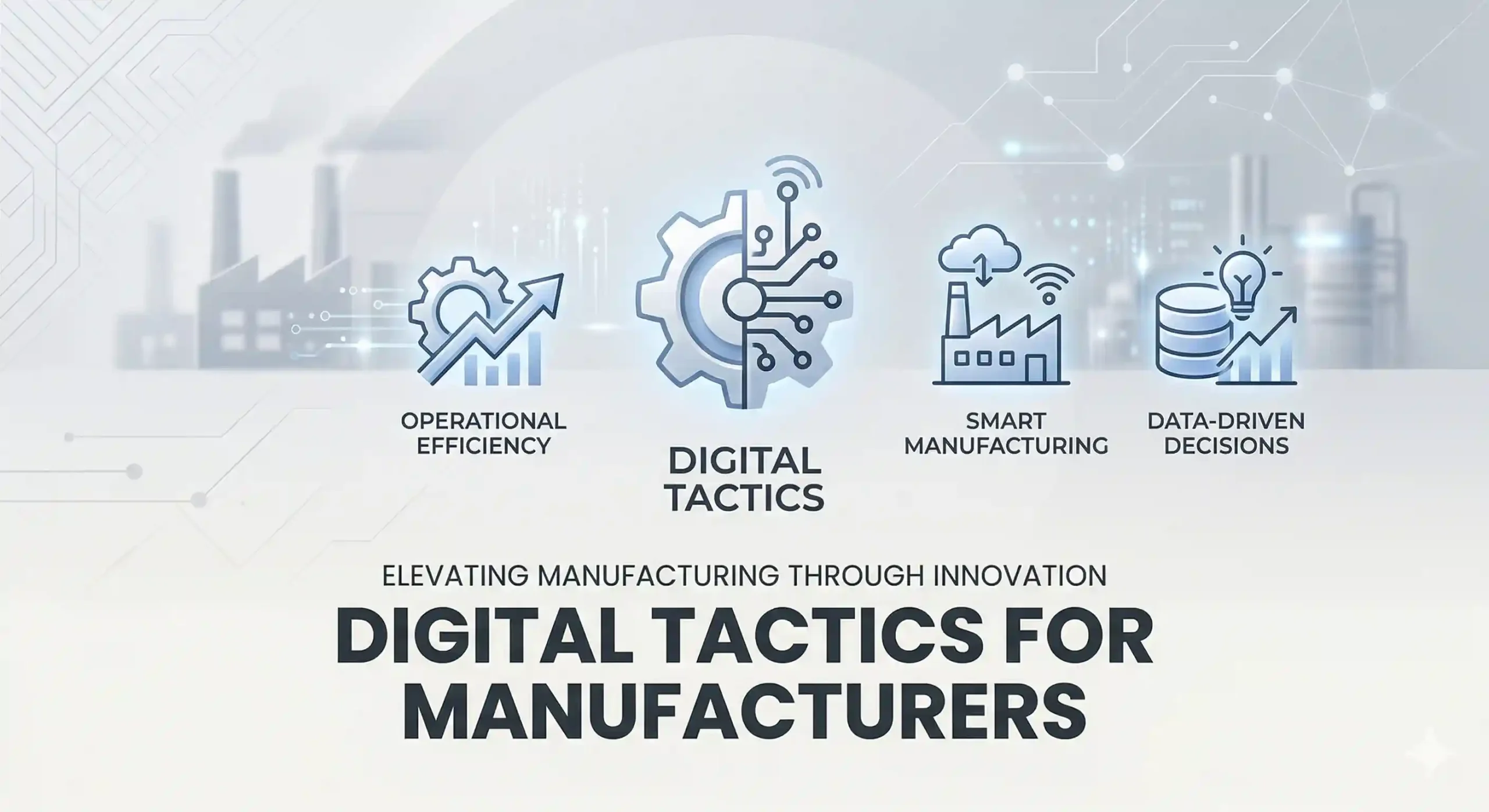
Most manufacturers market the same way they did 15 years ago. Trade shows, print ads, cold calls, and a website that looks like it was built in 2012.
Meanwhile their buyers have changed completely. Today a procurement director researches suppliers online before making a single call. An engineering manager reads technical content and compares vendors on LinkedIn. A plant operations leader watches product demos on YouTube before attending a trade show.
The manufacturing industry has a digital gap. The companies that close it will capture market share. The ones that ignore it will keep losing deals to competitors they never even knew about.
This article covers specific digital tactics that work for manufacturers. Not generic marketing advice repackaged for industrial companies. Practical strategies built for long sales cycles, technical buyers, and complex purchasing decisions.
Key Takeaways
- Manufacturing buyers complete 60 to 70 % of their research online before contacting a supplier. If your digital presence is weak, you are invisible during the most critical phase of their buying process.
- Digital marketing for manufacturers is not about likes and followers. It is about generating qualified leads from engineers, procurement managers, and operations directors who have real purchasing authority.
- SEO, technical content, and LinkedIn are the three highest-ROI digital channels for most manufacturers. Paid search works for high-intent keywords but requires careful budget management.
- The biggest mistake manufacturers make is treating digital as a separate activity from sales. Digital tactics must connect directly to your CRM, sales process, and pipeline metrics.
- You do not need a massive budget to start. A focused strategy on 2 to 3 channels with consistent execution will outperform scattered efforts across 10 platforms.
Why Manufacturers Struggle with Digital Marketing
Manufacturing is not a typical B2B environment. The sales cycles are longer, the products are more technical, and the buyers are more skeptical. This creates specific challenges that most digital marketing playbooks do not address.
The buyer is technical, not emotional
A manufacturing buyer does not respond to flashy ads or clever slogans. They want specifications, tolerances, certifications, and proof of performance. Your digital content has to speak their technical language without sounding like a sales pitch.
The sales cycle involves multiple stakeholders
A typical manufacturing purchase involves engineers, quality managers, procurement teams, and C-level executives. Each stakeholder has different concerns and evaluates vendors through a different lens. Your digital strategy has to reach all of them.
The industry is relationship-driven
Manufacturers have built businesses on personal relationships, handshakes, and trade show conversations. Digital feels unfamiliar and even unnecessary to many manufacturing leaders. But the reality is that your competitors are already using digital to reach your prospects before you walk into the trade show booth.
Marketing teams are small or nonexistent
Many manufacturers have one or two people handling all marketing activities. Some have none at all and rely entirely on the sales team. This means digital tactics must be efficient and focused. There is no room for experimentation across 15 channels.
The Foundation: Fix Your Website First
Before running any digital campaigns, your website needs to work as a lead generation tool. For most manufacturers the website is a digital brochure. It shows products, lists certifications, and has a “Contact Us” form buried on the last page.
That is not enough. Your website is the first place a buyer goes after hearing about you. If it does not answer their questions quickly, they leave and check a competitor’s site instead.
What a manufacturing website must include
Clear product and capability pages. Every product line and service capability should have its own page with detailed specifications, applications, and technical data. Do not hide this information behind a login or a PDF download. Make it easy to find and easy to read.
Industry and application pages. Create pages organized by the industries you serve. If you make precision components for aerospace, medical devices, and automotive, each industry should have its own page showing relevant experience, certifications, and case studies.
Case studies with measurable results. Buyers want proof that you can deliver. Create case studies that show the problem you solved, how you solved it, and what results the customer achieved. Include specific numbers whenever possible.
Technical resources. White papers, engineering guides, specification sheets, and comparison charts give technical buyers the information they need. This type of content also ranks well in search engines and attracts high-quality organic traffic.
Clear calls to action on every page. Do not make visitors search for how to contact you. Every page should have a clear next step: request a quote, download a spec sheet, schedule a consultation, or talk to an engineer.
Website speed and mobile experience
Manufacturing buyers increasingly research on mobile devices, especially on the factory floor or during travel. If your website loads slowly or does not work well on a phone, you are losing visitors. Test your site speed and mobile experience regularly.
SEO for Manufacturers: Owning the Search Results Your Buyers Use
Search engine optimization is the highest-ROI digital channel for most manufacturers. When a procurement manager searches for “custom CNC machining for medical devices” or “ISO 13485 certified contract manufacturer,” your company needs to appear on the first page.

Why SEO matters for manufacturing
Manufacturing buyers use search engines to find new suppliers, compare capabilities, and research technical solutions. If your website does not rank for the terms your buyers are searching, you are invisible during their research phase.
Unlike paid ads, SEO generates traffic continuously without ongoing ad spend. A well-optimized page can bring qualified visitors for years after it is published.
How to build an SEO strategy for manufacturing
Start with keyword research focused on buyer intent. Do not target generic keywords like “manufacturing” or “industrial products.” These are too broad and too competitive. Instead target specific, high-intent phrases that match what your buyers actually search for.
Examples of strong manufacturing keywords:
- “titanium CNC machining services”
- “custom injection molding for automotive”
- “contract manufacturer FDA registered”
- “precision sheet metal fabrication small batch”
These long-tail keywords have lower search volume but much higher buyer intent. The people searching these terms are actively looking for a supplier.
Create dedicated pages for each capability and material. If you offer CNC machining, injection molding, and sheet metal fabrication, each service needs its own page. If you work with specific materials like titanium, stainless steel, or engineering plastics, create separate pages for those as well.
Each page should be 800 to 1,500 words with technical detail, applications, specifications, and a clear call to action. This structure helps search engines understand what you offer and match you with relevant queries.
Build technical content that answers buyer questions. Engineers and procurement managers search for answers to specific technical questions. Write content that answers those questions directly. Topics like “how to choose between 304 and 316 stainless steel” or “tolerance standards for aerospace CNC parts” attract exactly the right audience.
Optimize your Google Business Profile. For manufacturers with physical facilities, a complete Google Business Profile helps with local search visibility. Include photos of your facility, list your certifications, and keep your contact information accurate.
Content Marketing for Technical Buyers
Content marketing in manufacturing is not about blog posts with stock photos and generic advice. It is about creating technical resources that help buyers make better decisions.
Types of content that work for manufacturers
Technical guides and white papers. In-depth documents that explain a process, compare materials, or help buyers spec a product. These position your company as a technical authority and generate qualified leads when offered as downloads.
Case studies. Real examples of problems you solved for real customers. Include the challenge, your approach, the results, and specific metrics when possible. Case studies are the most effective content type for manufacturing sales.
Application notes. Short documents that show how your product or service solves a specific problem in a specific application. These are especially valuable for companies that serve multiple industries.
Video content. Factory tours, process demonstrations, product testing footage, and engineer interviews. Video builds trust faster than text because buyers can see your facility, your equipment, and your team. You do not need a professional production crew. A smartphone video of your CNC machines running a complex part is more authentic and convincing than a polished corporate video.
Comparison content. Articles or charts that compare materials, processes, or technologies help buyers during the evaluation phase. Content like “casting vs. machining: which process fits your application” addresses a real decision that buyers face.
Content distribution for manufacturers
Creating content is only half the work. You also need to distribute it to the right audience.
Email marketing. Build a list of prospects and customers and send technical content regularly. Monthly or bi-weekly newsletters with useful technical insights keep your company top of mind. Do not send sales pitches. Send information that helps buyers do their jobs better.
LinkedIn. This is where manufacturing decision-makers spend time online. Share your content on both personal profiles and your company page. Personal profiles of engineers and sales leaders get significantly more reach than company pages.
Industry publications and directories. Submit articles to trade publications in your industry. List your company in relevant industrial directories like ThomasNet, Kompass, or industry-specific platforms. These sites rank well in search engines and drive qualified referral traffic.
LinkedIn Strategy for Manufacturers
LinkedIn is the most underused digital channel in manufacturing. Most industrial companies have a company page with occasional posts about trade show attendance or new equipment purchases. That is not a strategy.
Why LinkedIn works for manufacturers
LinkedIn gives you direct access to the people who buy from you. You can search by job title, industry, company size, and geography. You can find every procurement director, plant manager, and VP of Operations at your target accounts.
More importantly, LinkedIn is where professional content gets consumed. A well-written post from your VP of Engineering can reach thousands of relevant buyers without spending a dollar on ads.
How to build a LinkedIn presence for manufacturing
Optimize personal profiles of key team members. Your sales engineers, business development managers, and company leaders should have complete profiles that clearly describe what your company does and who you serve. The headline should communicate value, not just a job title.
Instead of “Sales Manager at ABC Manufacturing” write “Helping aerospace OEMs reduce machining lead times by 40% through precision 5-axis CNC capabilities.”
Post content consistently. Aim for 2 to 3 posts per week from personal profiles. Share technical insights, project highlights, factory floor photos, and industry observations. The posts that perform best in manufacturing are real examples from your work, not corporate marketing materials.
Engage with your target audience. Comment on posts from potential customers, industry leaders, and trade publications. Thoughtful comments build visibility and relationships. This takes 15 to 20 minutes per day and costs nothing.
Use LinkedIn for targeted outreach. Identify specific companies and contacts that match your ICP. Send personalized connection requests and follow-up messages. Do not pitch immediately. Start by sharing a relevant piece of content or asking a genuine question about their operations.
Paid Digital Advertising for Manufacturers
Paid ads can accelerate pipeline for manufacturers, but only when used strategically. The wrong approach burns budget quickly with no return.
Google Ads for manufacturers

Google Search ads work well for high-intent keywords where a buyer is actively searching for a supplier. If someone searches “custom aluminum extrusion manufacturer” and you offer that service, a Google ad puts you at the top of the results immediately.
Best practices for manufacturing Google Ads:
- Target specific, high-intent keywords related to your capabilities.
- Create dedicated landing pages for each ad group with relevant technical content.
- Include your key differentiators: certifications, tolerances, lead times, and minimum order quantities.
- Track conversions by form submissions and phone calls, not just clicks.
- Start with a modest budget of $2,000 to $5,000 per month and optimize based on CPL and lead quality.
What to avoid: Do not bid on broad industry terms like “manufacturing” or “industrial supplier.” These keywords are expensive and attract unqualified traffic. Focus on specific capability and material-based keywords instead.
LinkedIn Ads for manufacturers
LinkedIn Ads allow precise targeting by job title, industry, company size, and geography. This makes them effective for reaching specific decision-makers at target accounts.
Best formats for manufacturing LinkedIn Ads:
- Sponsored Content with technical resources like white papers, case studies, or engineering guides.
- Lead Gen Forms that collect contact information without sending the user away from LinkedIn. These convert 2 to 5 times better than sending traffic to a landing page.
- Message Ads for highly targeted outreach to specific job titles at specific companies.
What to expect: LinkedIn CPL for manufacturing typically ranges from $80 to $250 depending on targeting specificity and content quality. This is higher than Google in many cases, but the lead quality tends to be stronger because of precise audience targeting.
Retargeting
Most website visitors leave without taking any action. Retargeting ads follow those visitors across the web and remind them about your company. For manufacturers, retargeting works especially well because the sales cycle is long and buyers research over weeks or months.
Set up retargeting through Google Display Network or LinkedIn. Show ads featuring case studies, capability overviews, or technical guides to people who previously visited your website.
Email Marketing for Manufacturing Companies
Email remains one of the most effective digital channels for manufacturers. It is direct, measurable, and costs almost nothing compared to paid advertising.
Building your email list
Your email list should include current customers, past customers, trade show contacts, website leads, and LinkedIn connections who have opted in. Do not buy email lists. Purchased lists have low engagement, high bounce rates, and can damage your sender reputation.
What to send
Monthly technical newsletter. Share industry insights, new capability announcements, project highlights, and useful technical content. Keep each email focused and valuable. If the reader learns something useful, they will open the next one.
Product and capability announcements. When you add new equipment, achieve a new certification, or expand into a new capability, tell your list. These updates signal growth and investment in quality.
Case study spotlights. Feature one customer success story per email. Show the problem, your solution, and the measurable result. Case studies in emails consistently generate the highest engagement rates for manufacturers.
What to avoid
Do not send emails every day. Once or twice per month is enough for most manufacturers. Do not make every email a sales pitch. The ratio should be 80 percent useful content and 20 percent promotional. Do not send generic messages to your entire list. Segment by industry, role, or engagement level for better results.
Measuring What Matters: Digital Metrics for Manufacturers
Digital marketing without measurement is just spending money and hoping it works. Here are the metrics that manufacturers should track.
Marketing metrics
Website traffic by source. Know where your visitors come from: organic search, paid ads, LinkedIn, email, or referral sites. This tells you which channels are working.
Keyword rankings. Track your position for the specific terms your buyers search. Improving from page 3 to page 1 for a high-intent keyword can transform your lead flow.
Content engagement. Which pages do visitors spend time on? Which technical guides get downloaded? This data tells you what topics matter to your audience.
Business metrics
Cost per lead (CPL). How much does it cost to generate one qualified lead through each digital channel? Compare this across channels to allocate budget effectively.
Lead-to-opportunity rate. What percentage of digital leads become real sales opportunities? If this number is low, the problem is either targeting or lead quality.
Pipeline contribution. How much total pipeline value came from digital marketing sources? This is the most important metric for proving ROI to manufacturing leadership.
Customer acquisition cost (CAC). Total marketing and sales cost divided by the number of new customers acquired. Track this over time and compare it to your average deal value.
Metrics table for manufacturers
| Metric | Benchmark | Signal of a Problem |
|---|---|---|
| Website traffic growth | 10-20% quarter over quarter | Flat or declining traffic |
| Organic keyword rankings | Page 1 for 10+ target terms | No rankings for buyer-intent keywords |
| CPL (Google Ads) | $50–$150 | Over $200 without strong lead quality |
| CPL (LinkedIn Ads) | $80–$250 | Over $300 with low SQL rate |
| Lead-to-opportunity rate | 15–30% | Below 10% signals targeting issues |
| Email open rate | 25–35% | Below 15% means list quality is poor |
| Pipeline from digital | 20–40% of total pipeline | Below 10% means digital is underperforming |
Bottom Line
Digital marketing for manufacturers is not optional anymore. Your buyers are researching online, comparing suppliers, and making shortlists before they ever pick up the phone. If your company is not visible during that research phase, you are not on the shortlist.
You do not need a massive budget or a 20-person marketing team. You need a focused strategy built on three pillars: a website that converts, technical content that ranks, and a LinkedIn presence that builds trust.
Start with the fundamentals. Fix your website, create content for technical buyers, and show up where your prospects spend time online. Measure everything with pipeline metrics, not vanity numbers.
Manufacturers who invest in digital now will own their market in 3 to 5 years. Those who wait will wonder where their customers went.
